The Marketer's Decade | Part I


I grew up in the era of influencer marketing. And I'll admit that a lot of the things I wanted to buy, I wanted because someone I followed was using them. Not because an ad told me to, but because someone I felt I knew picked it up, talked about why they loved it, and made it feel like a tip from a friend.
As someone building a product for marketing teams, I think about this a lot. What made that kind of marketing so compelling? It wasn't necessarily that the products were better. It was that the feeling was different. A brand became memorable the moment it reached me through a voice I trusted. Those same brands were in my inbox too and if I am honest, I treated them very differently. A creator's recommendation got my full attention, an email got a quick glance. Same brand, same product. What changed was whether it felt meant for me.
That gap is what I keep coming back to. Because AI was supposed to close it. Email and push are channels brands actually own, and in theory, AI should make every interaction feel as personal as a creator's recommendation. Instead, most of what it produces is more of the same, only faster: a thousand polished messages before lunch, with all the warmth of a terms-and-conditions page. We have built machines that can talk endlessly and somehow say nothing to anyone.
What those creators had wasn't a bigger budget. They knew their audience, showed up at the right moment, and talked about things they genuinely cared about. That's not influencer magic. That's just good marketing. And brands finally have the power to do this. With new AI tools, they can bring that same thinking into their own channels, at scale, for every customer.
What they need is someone deciding what's worth saying.
The Great Flattening
Instead, most brands are letting the machines decide. Emails, ads and landing pages can now be generated in seconds. This wave of innovation was supposed to help brands say something more meaningful to each customer. Most are using it to turn up the volume.
This experience leads me to think of this as the Great Flattening. Every brand's messages start to sound alike, and many brands still aren't facing the fundamental problem: their customers have quietly stopped listening. Which leaves a slightly awkward question - when every brand sounds the same, how do you become the brand worth hearing?
My bet is on the conversation. When I think back on the age I grew up in, it all leads me to a single hypothesis: the creators who won me over didn't have better products, they had better conversations. Of course the product still has to deliver, and the relationship still has to give people a reason to stay. But communication is where a brand earns the right to be heard before someone has even tried the product.
And doing that comes down to something pretty simple: does this company understand who I am and what I need right now?
That's where marketers come in and that's why I think it's their decade.
Marketers sit at the point of engagement: the exact moment a brand meets a person. They're the ones who translate what a brand stands for into something a human actually experiences. And they do it on three levels at once:
- Emotionally: Why does this brand feel like it gets me?
- Functionally: What will it actually do for me, today?
- Materially: Why is it worth my money, time or attention?
Because marketers sit at this intersection, they become the difference.
I want a human to talk to me
Like many of you, I'm becoming a victim of AI slop. Open your inbox or your X feed and you can feel it: competent, tidy messages that nobody will remember by dinner. There's nothing technically wrong with most of it. That's precisely the problem. It's good enough to send, but rarely good enough to matter.
As a customer, my reaction is simple: I want a human to talk to me, the way those creators once did. I don't literally mean a person typing every message. I mean something that feels like it was written by someone who knows me, for me, right now. Something that remembers I already bought the thing, notices I've gone quiet, and has the good sense not to send me the same offer three times in a week.
That's a much higher bar than "personalized" used to mean.
Judgment becomes the scarce input
Clearing that bar changes how a marketer has to work. Speaking to millions of people as if each conversation were individual requires two things the old playbook never really asked for.
The first is far more information. Not more dashboards, but a genuine understanding of each person and each moment: what they've done, what they care about, and what they're likely to need next.
The second is far more efficiency. Information is useless if turning it into something meaningful takes a month and several meetings.
Get both, and something counterintuitive happens: the marketer's judgment and creativity become more valuable, not less. When producing a message costs almost nothing, the value moves to deciding which messages deserve to exist. What's the real insight about this customer? What angle is nobody else taking? What would this brand never, ever say? Those are judgment calls. And no amount of generation replaces them.
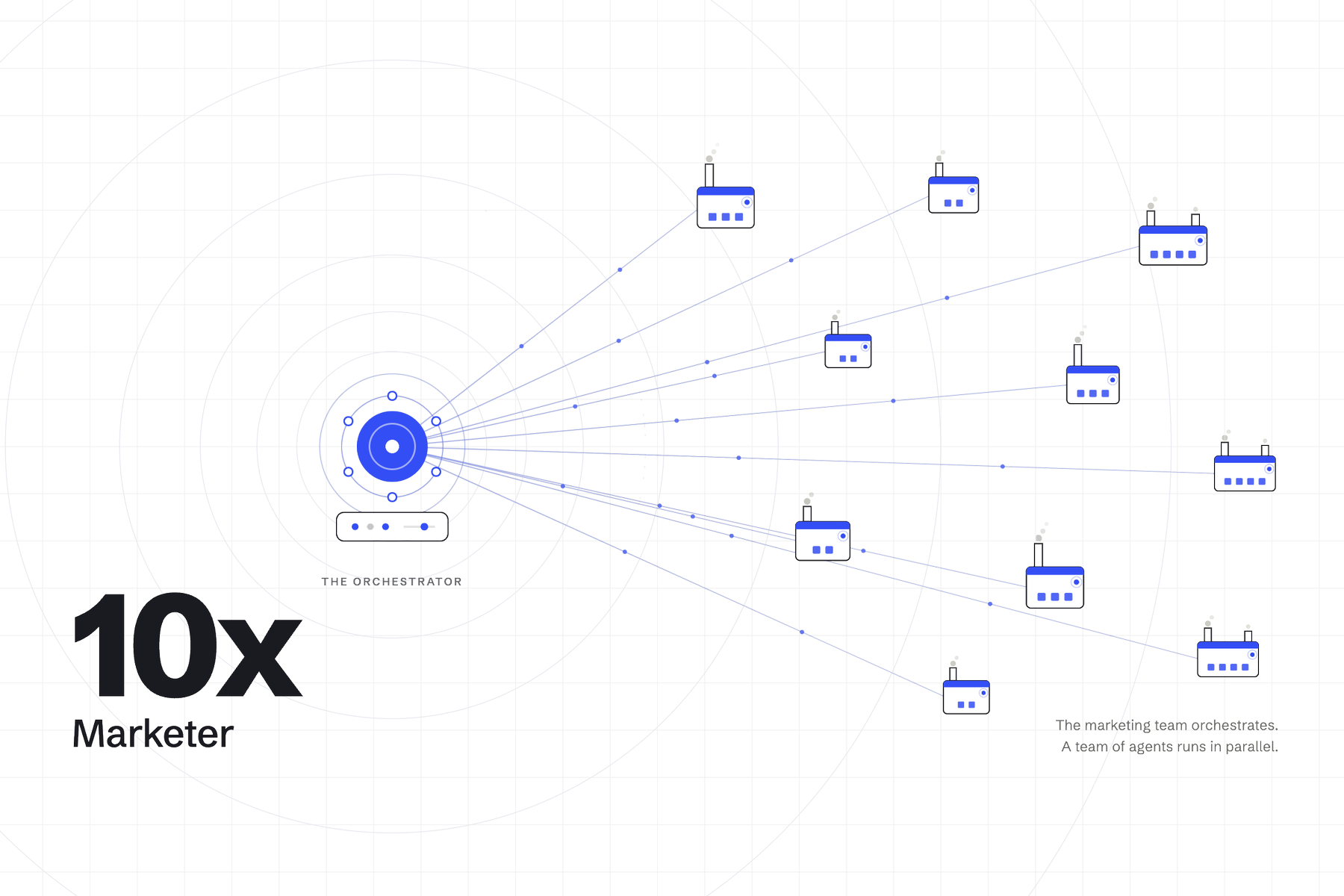
The marketer of the next few years looks less like a campaign producer and more like an editor-in-chief: setting taste, intent and boundaries, and choosing among many possibilities instead of hand-building a few.
Back to the human
This brings us back to the quiet irony in all of this. The more of marketing that machines can produce, the more it matters that a human is steering. Not because people are sentimental about craft, but because customers can tell the difference between a brand that's talking at them and one that's actually listening. The marketers who thrive in the next few years won't be the ones who send the most. They'll be the ones who understand their customers best and decide what's worth saying.
So if you're a marketer wondering where you fit in all of this, I'd say right at the center. Companies need people with taste to decide what should be said more than ever.
But taste is only half of it. The way marketers work is changing too. That's what Part II is about: why staying relevant now means moving at speed, and why I'd wager there's only one way to get there - iteratively.